Research
The NBER conducts and disseminates independent, cutting-edge, non-partisan research that advances economic knowledge and informs policy makers and the business community.
New NBER Papers
-
Working Paper
Using a representative sample of more than 7,000 Ukrainians, we study how information treatments affect corruption...
-
Working Paper
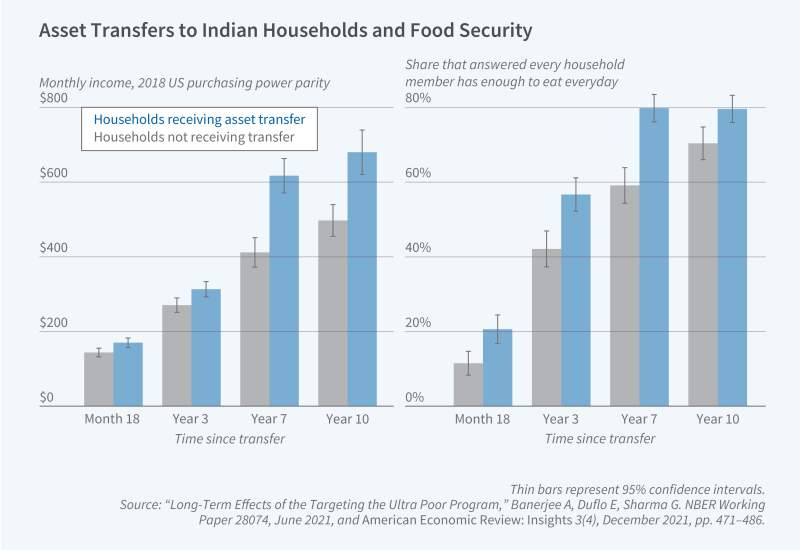
Much of development economics, both micro and macro, posits theories and explores the empirics of poverty traps. A...
-
Working Paper
We provide the first direct estimates of distribution expenses incurred by manufacturing plants and quantify their...
-
Working Paper
This paper measures and analyzes management practices in the Kenyan health care sector, drawing on a nationally...
-
Working Paper
This paper shows that the industrial composition of a city's local economy affects its municipal borrowing costs. In...
Latest Books
Keep Track of New NBER Working Papers with New This Week
The Digest
The Digest is a free monthly publication featuring non-technical summaries of research on topics of broad public interest.
Article
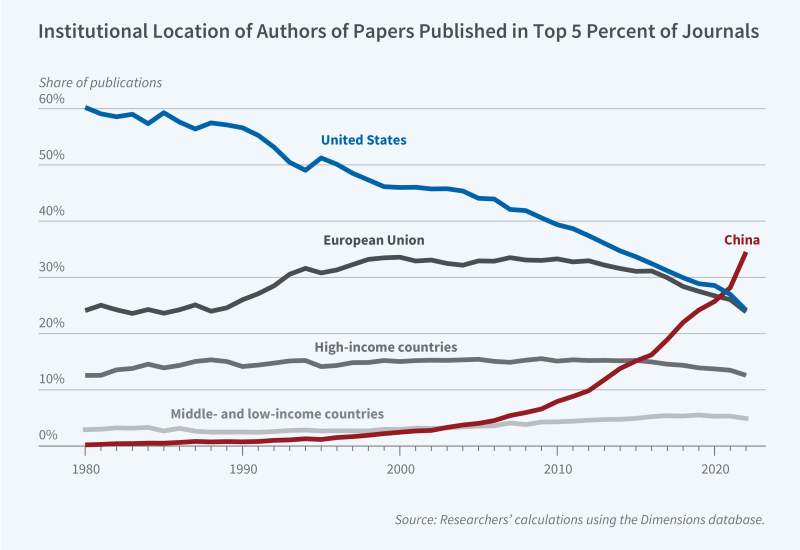
Although Western nations have dominated global scientific research since the nineteenth century, recent decades have witnessed profound shifts in where research is conducted, what topics it addresses, and how widely its findings spread across borders. In The Geography of Science (NBER Working Paper 34694), Abhishek Nagaraj and Randol Yao provide a comprehensive analysis of the evolution of global science between 1980 and 2022. Using data on 44 million...
Article
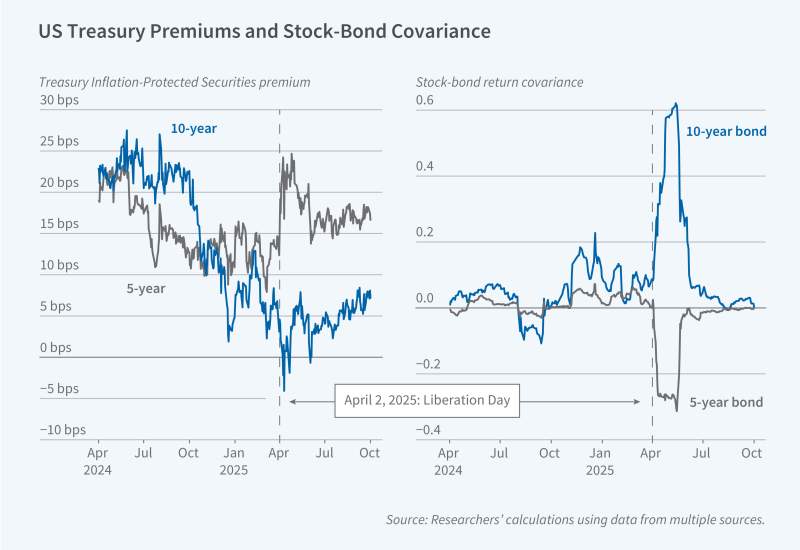
In April 2025, the United States implemented its highest tariffs in a century, triggering reciprocal tariff announcements from China, Canada, and the European Union. In the days following the tariff announcements, the S&P 500 fell more than 11 percent. The yield on 30-year Treasury bonds rose and peaked at 5.2 percent in late May, its highest level since before the 2007–08 global financial crisis. In Tariff War Shock and the Convenience Yield of US Treasuries—...
The Reporter
The Reporter is a free quarterly publication featuring program updates, affiliates writing about their research, and news about the NBER.
Article
Author(s):
The Development Economics (DEV) program was launched in 2012 and has 190 affiliated researchers. The success the program is enjoying today is in very large part thanks to Duncan Thomas, who led the program for its first six years. A unique aspect of the program is its close connections with BREAD, the Bureau for Research and Economic Analysis of Development, which is an independent group with worldwide membership. Our fall program meeting is held jointly with BREAD...
Article
Author(s):
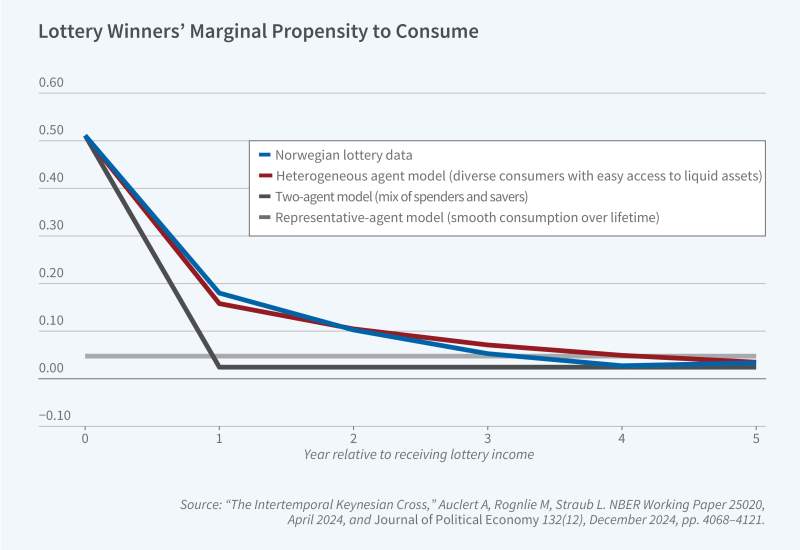
In the past decade, the widespread availability of large household- and firm-level datasets has sparked a “micro data” revolution in macroeconomics. Our research tries to understand the macroeconomic implications of this microeconomic heterogeneity by answering two key questions. First, what features of the micro data are most informative about macroeconomic outcomes? In particular, when can we find micro-sufficient statistics for these macro effects? Second, how can we make...
The Bulletin on Health
The Bulletin on Health summarizes recent NBER Working Papers pertaining to health topics. It is distributed digitally three times a year and is free.
Article
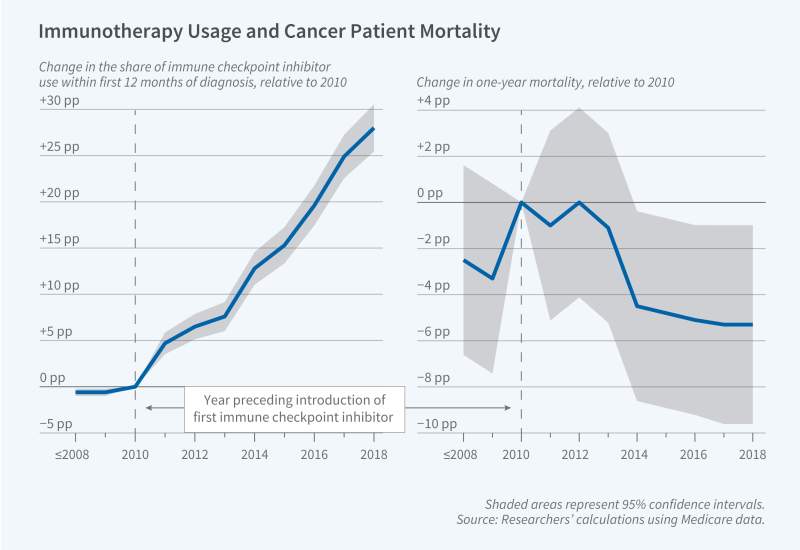
Immune checkpoint inhibitors (ICIs) are immunotherapy drugs that mobilize the patient’s immune system to detect and attack cancer cells. They are considered a breakthrough development in cancer care, but are very expensive, with a full course of treatment costing more than $150,000 per patient. In The Impact of Immunotherapy on Reductions in Cancer Mortality: Evidence from Medicare (NBER Working Paper 34317), Danea Horn, Abby E. Alpert, Mark Duggan, and Mireille...
Article
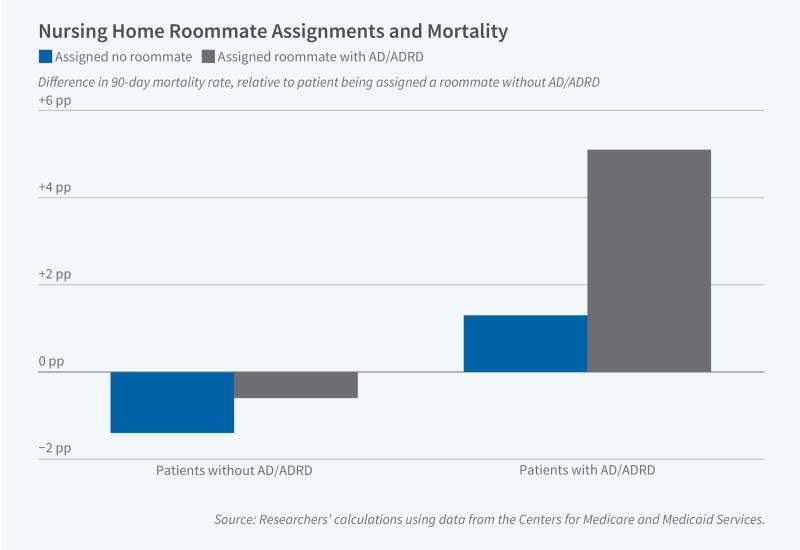
In 2025, nearly 1.2 million Americans lived in nursing homes. Medicaid and Medicare expenditures of $91 billion represented two-thirds of total revenues for nursing care facilities. With the prevalence of Alzheimer’s disease and Alzheimer's disease-related dementias (AD/ADRD) projected to rise as the US population ages, the need for nursing home care is expected to increase. Nearly 80 percent of nursing home patients are assigned shared rooms, which raises the question...
The Bulletin on Entrepreneurship
Introducing recent NBER entrepreneurship research and the scholars who conduct it
Article
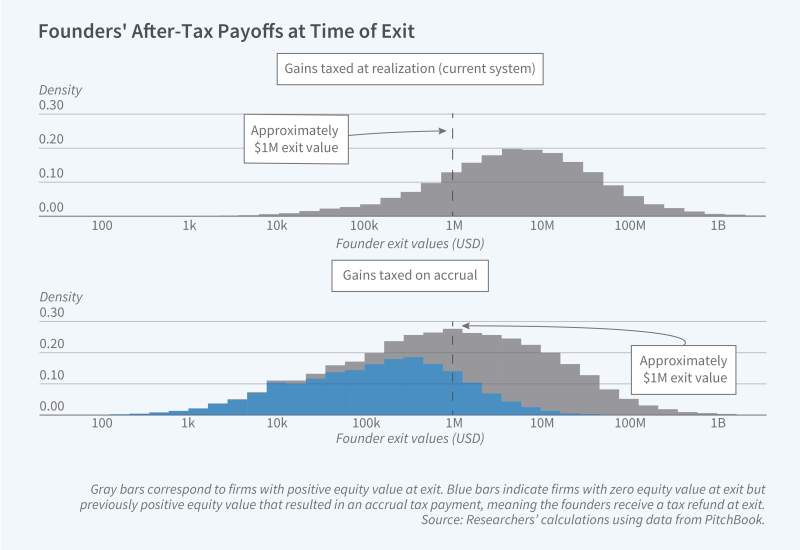
The US capital gains tax is realization based, which means that taxes are due when appreciated assets are sold. Critics of this approach argue that it allows asset holders, such as corporate founders, to defer their tax obligations, sometimes indefinitely. An alternative approach, taxing gains on accrual, would require asset holders to value their assets periodically and to pay tax on the gain since the last valuation. Critics of this approach argue that it could force...
Article
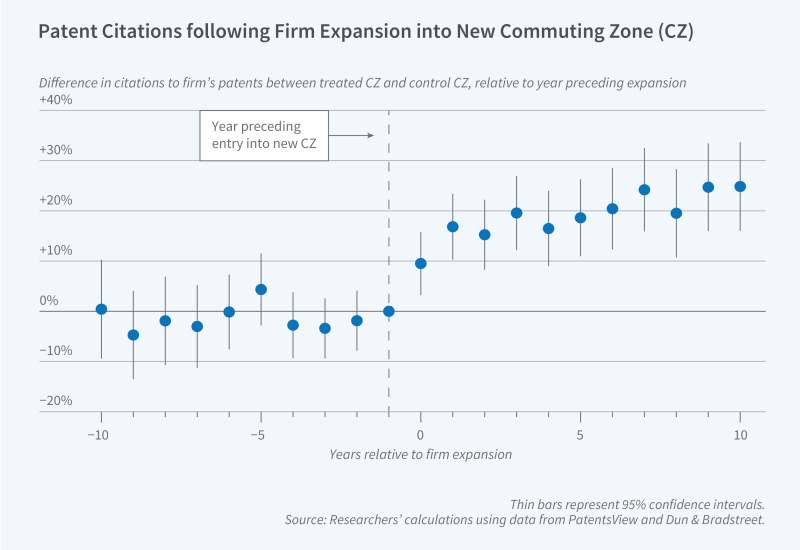
Most US innovation stems from firms that operate R&D facilities in many local markets. IBM and Google are two prominent examples, with R&D activities—measured by patenting—in approximately 70 and 20 distinct locations, respectively. When a technology company opens an R&D facility in a new location, it may generate knowledge spillovers that benefit nearby firms and inventors. In The Geography of Innovative Firms (NBER Working Paper 34010), Craig A. Chikis,...
Explore NBER-Based Research Projects
Learn about NBER Affiliated Scholars