Intergenerational Effects of Welfare Reform
In a research program with colleagues Nancy E. Reichman at Rutgers University and Ariel Kalil at the University of Chicago, we have been investigating the effects of public assistance retraction on the next generation. We have focused on the 1996 US Personal Responsibility and Work Opportunity Reconciliation Act (PRWORA) and on state waivers in the early 1990s, collectively referred to as welfare reform, one of the most sweeping social policies of the twentieth century. This legislation reflected a growing consensus that public assistance is a cause of dependence rather than a consequence of disadvantage. Key pillars of welfare reform were work requirements and lifetime limits on welfare participation, both of which are strong work incentives. The logic was that labor force participation would eliminate a “culture of poverty” by increasing self-sufficiency and reconnecting members of an increasingly marginalized underclass to the mainstream ideals of a strong work ethic and civic responsibility.
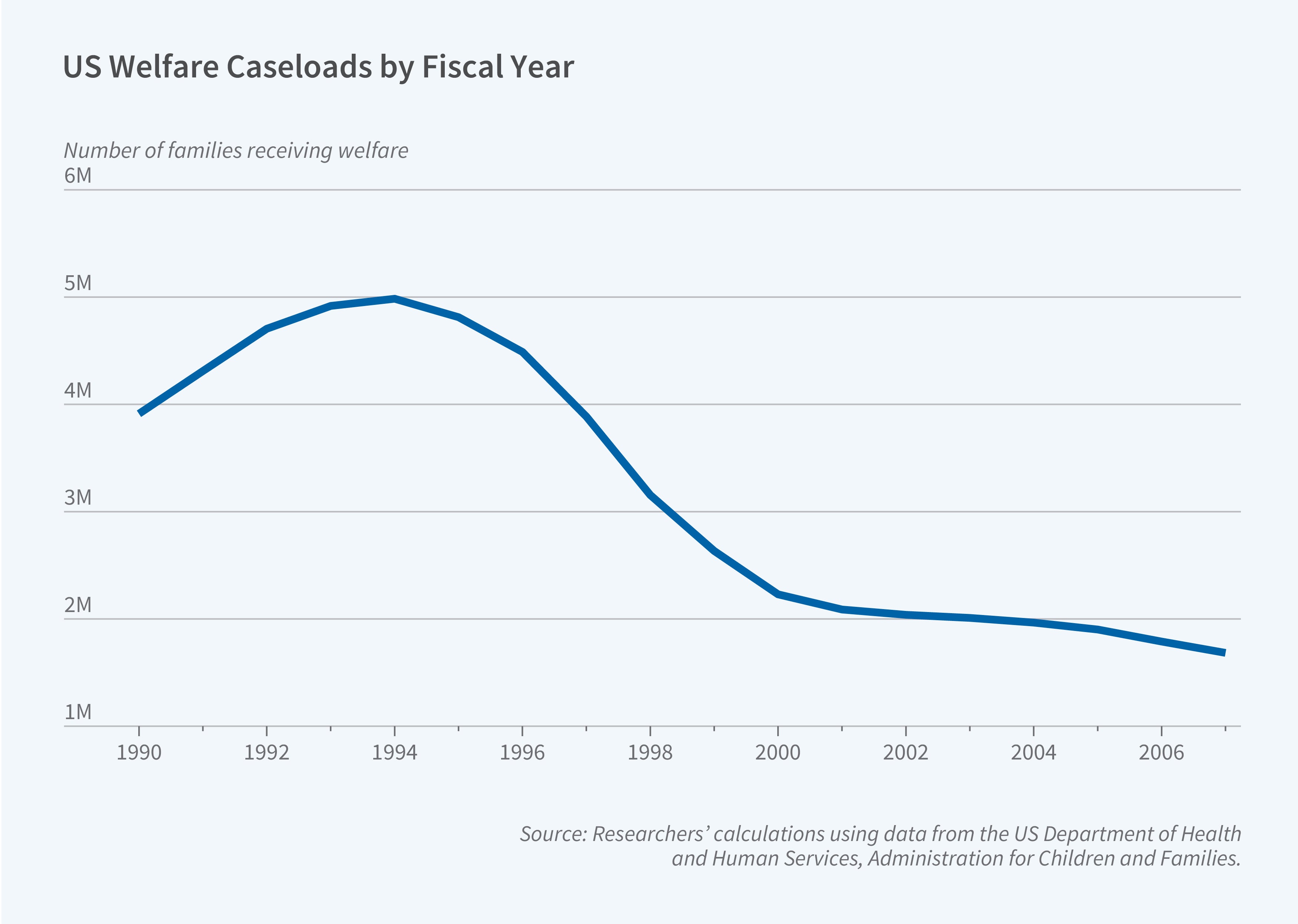
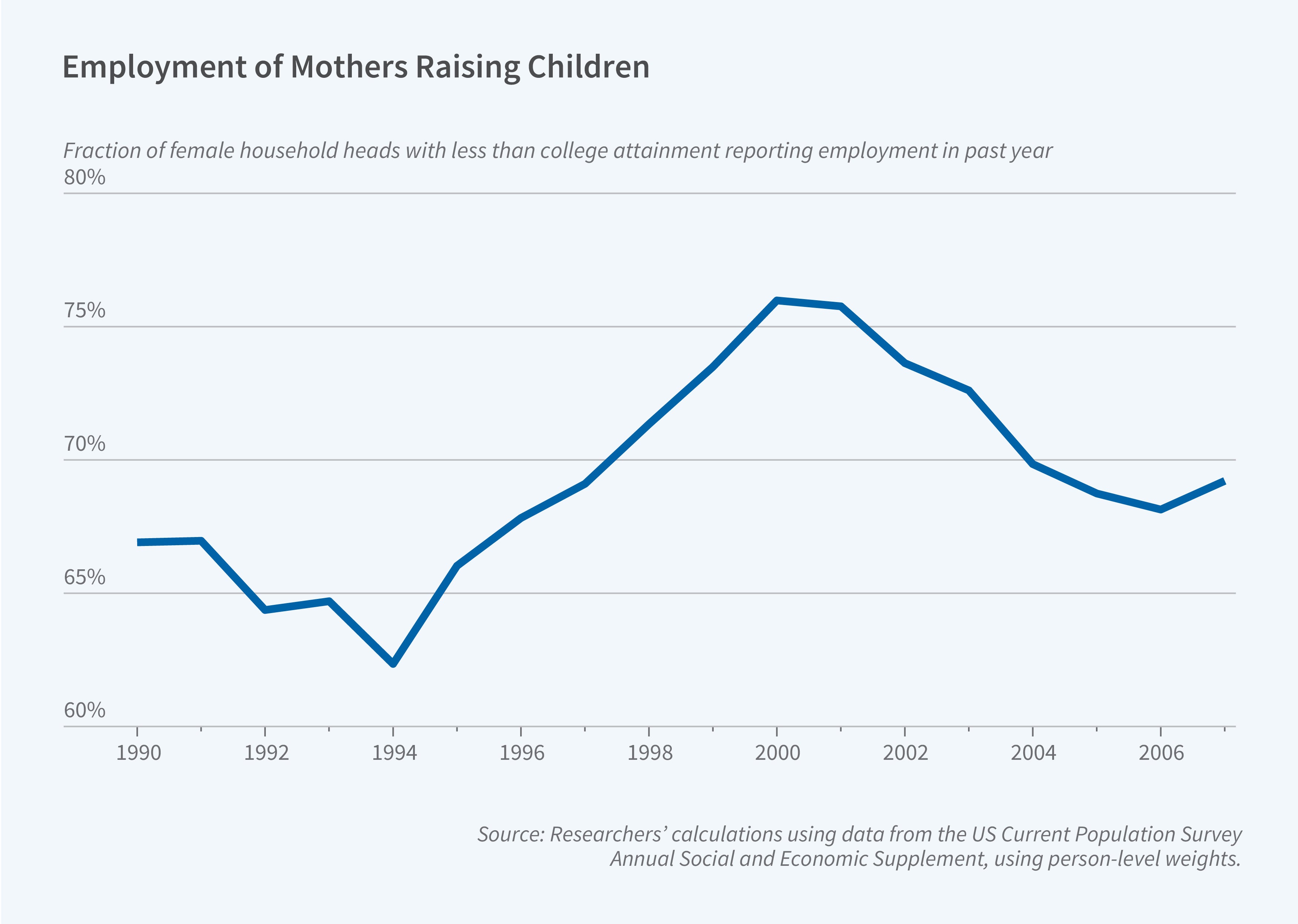
Since the reforms, welfare caseloads have plummeted (Figure 1) and employment of low-skilled women has increased (Figure 2); these patterns reflect the time limits and work requirements mandated by the PRWORA legislation. Our work shows that welfare reform led to decreases in women’s substance use and crime, as well as increases in women's voting (an indicator of civic engagement), suggesting that welfare reform has brought low-income mothers from the margins to the mainstream.1,2,3 However, we also found that welfare reform reduced adult women’s college attendance and full-time vocational schooling.4,5 If work and education are complements, these findings suggest risks for women’s economic trajectories. Moreover, prior research has found that while welfare reform increased income and reduced poverty among low-income mothers on average, women at the very bottom of the income distribution or without a high school education did not benefit and may have even fallen further behind.
Another assumption underlying welfare reform was that the work-focused regime would break an assumed intergenerational transmission of welfare dependence. Studies found that welfare reform led to decreased high school dropout rates among girls and decreased teen fertility, at least in part through its “minor mother” requirements that mothers under 18 participate in education or training activities and live with a parent or guardian. If increases in education and decreases in fertility improve socioeconomic trajectories, these findings suggest that strong work incentives can interrupt the intergenerational association in welfare dependence between mothers and daughters.
Our research further tested whether welfare reform could put children on a path to self-sufficiency by examining its effects on adolescent behaviors associated with subsequent adult economic and health outcomes. Economic theory suggests that adolescents’ behavior will be responsive to strong work incentives under welfare reform, but the expected direction is ambiguous. On the one hand, increased family resources and human capital resulting from maternal employment may increase maternal investment in the wellbeing of children. Welfare reform may also increase the modeling of socially desirable behaviors, such as working and volunteering, and health-promoting behaviors, such as healthy eating and adequate sleep. As such, we would expect welfare reform to lead to decreases in risky and delinquent behaviors and increases in socially desirable and health-promoting behaviors of adolescents. On the other hand, the strong work incentives under welfare reform may reduce the quantity or quality of adult supervision of teenage children, which would decrease the costs to the teens of engaging in risky and delinquent behaviors while also decreasing the cost of avoiding some socially desirable and health-promoting behaviors. Prior research in psychology and economics suggests that changes in household circumstances affect boys' behavior more than girls’ and that early childhood (ages 0–5) is a sensitive period for parental input and household circumstances. As such, the effects of welfare reform on adolescent behaviors may vary by gender, age, and duration of exposure.
Two of our studies exploited differences in the implementation of welfare reform across states and over time to identify plausibly causal effects on criminal arrests among teens ages 15–17. Using data from the FBI’s Uniform Crime Reporting we assessed the extent to which teen arrests changed during the period from 1990 (before any welfare reform was in effect) to 2005 (when welfare reform had been fully implemented).6,7 We found that welfare reform led to increases in drug-related arrests with effects that appeared to be stronger for boys than girls, decreases in arrests for minor crimes (e.g., disorderly conduct, curfew and loitering law violations) with similar estimates for boys and girls, and no changes in arrests for serious violent or property offenses.
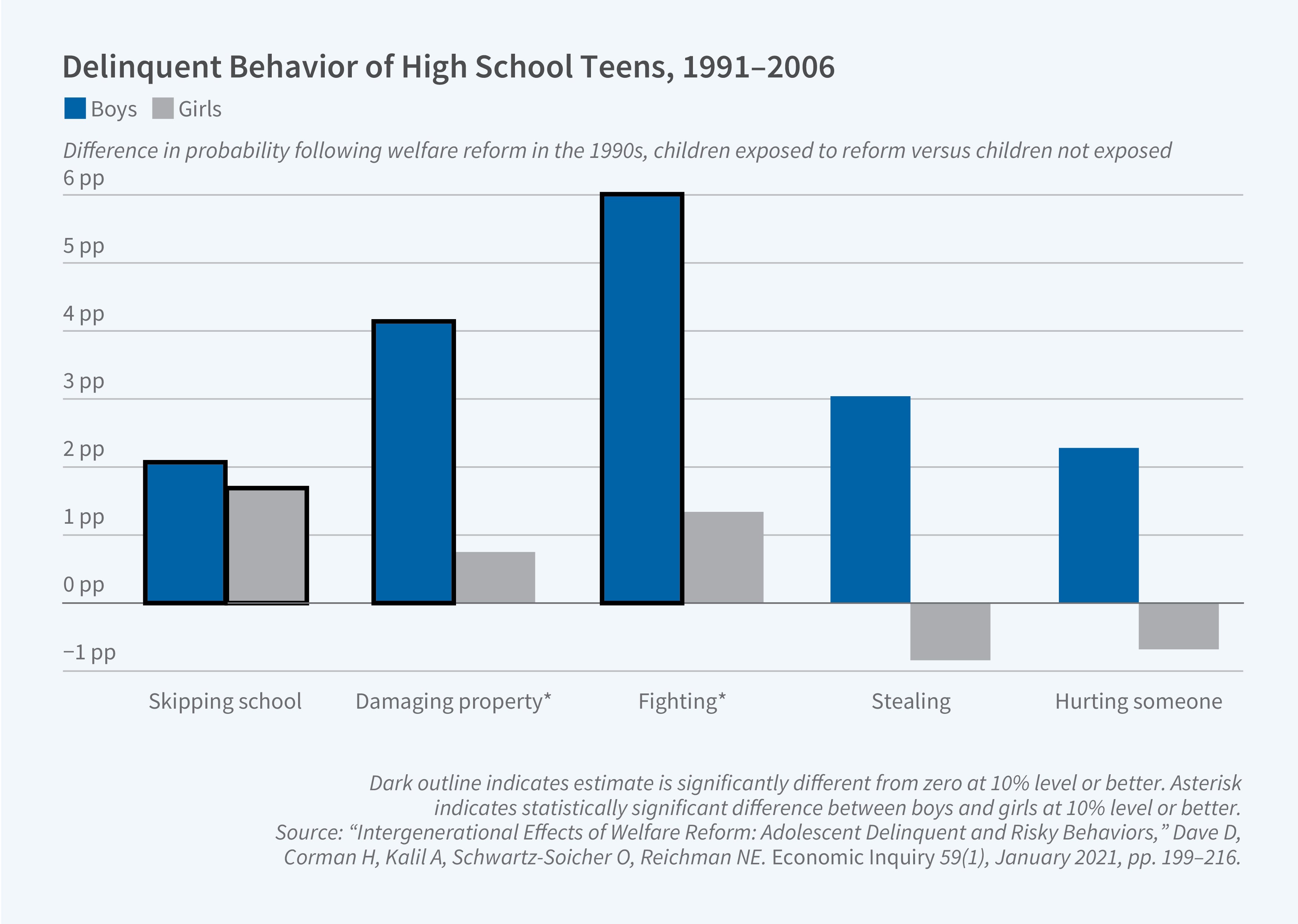
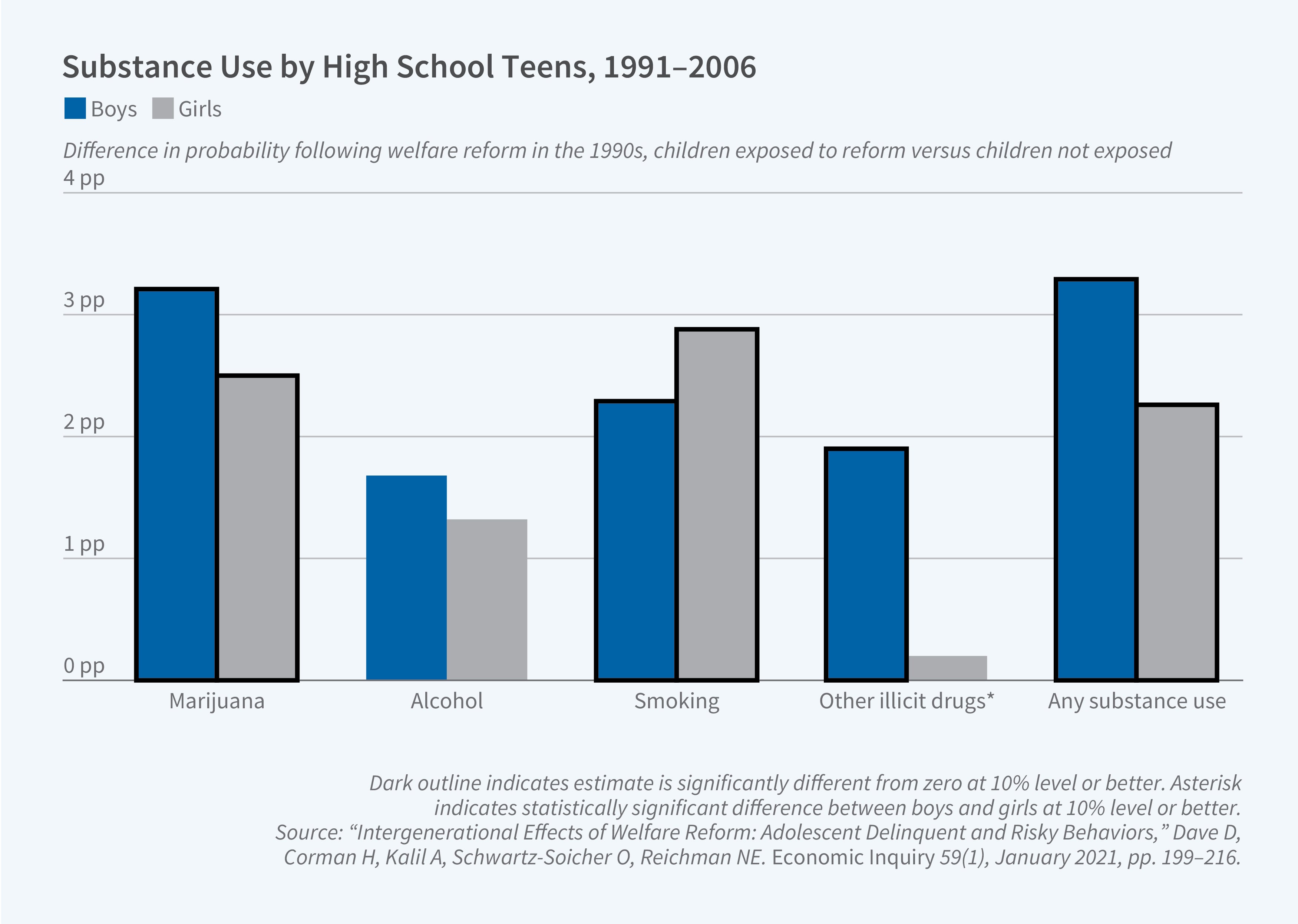
The effects on arrests could potentially reflect welfare reform–induced changes in reporting of teen crime rather than teens’ behavioral responses. To address this possibility and to explore youth behavior directly, we used 1991–2006 data from Monitoring the Future and difference-in-differences methods to estimate the effects of welfare reform on self-reported delinquent and substance use behaviors by gender among high school students.8 Figure 3 shows the effects of welfare reform on skipping school, damaging property, fighting, stealing, and hurting someone. These adolescent behaviors do not necessarily constitute crimes but are often precursors to adult criminal behavior. Welfare reform increased boys’ delinquent behaviors, with significant effects for skipping school, damaging property, and fighting. In contrast, the effects of welfare reform on girls were minimal, with a significant (positive) effect only for skipping school. Figure 4 shows the effects of welfare reform on substance use behaviors. Welfare reform increased substance use among both boys and girls, with significant effects for marijuana use, cigarette smoking, and any substance use. The increases were almost uniformly larger for boys than for girls, and there was a significant increase in other illicit drugs for boys. All told, welfare reform increased teens’ delinquency and substance use, with boys particularly affected.
Using the same data, we also investigated the extent to which welfare reform was associated with teenagers’ positive health and social behaviors.9 Positive health behaviors included regularly eating breakfast and fruits and vegetables, exercising, and getting adequate sleep. Positive social behaviors included doing homework, completing assignments, volunteering, participating in athletics and other extracurricular activities, and regularly attending religious services. We found no evidence that welfare reform affected any of these behaviors, leading us to conclude that the effects of welfare reform on teenagers were on net negative, particularly for boys.
Overall, we found no evidence of welfare reform effects on positive youth behaviors, but considerable evidence that it affected negative ones and that the negative effects were generally much larger for boys than girls. Potential explanations for the gender differences are that disruptive events take more of a toll on boys, perhaps through differential responses to welfare reform–associated maternal stress/anxiety, conflict between parents and children, or parental disengagement; that boys and girls at the same age have different levels of maturity or impulsivity; and that there were differential effects of welfare reform on household composition, place of residence, or peer groups.
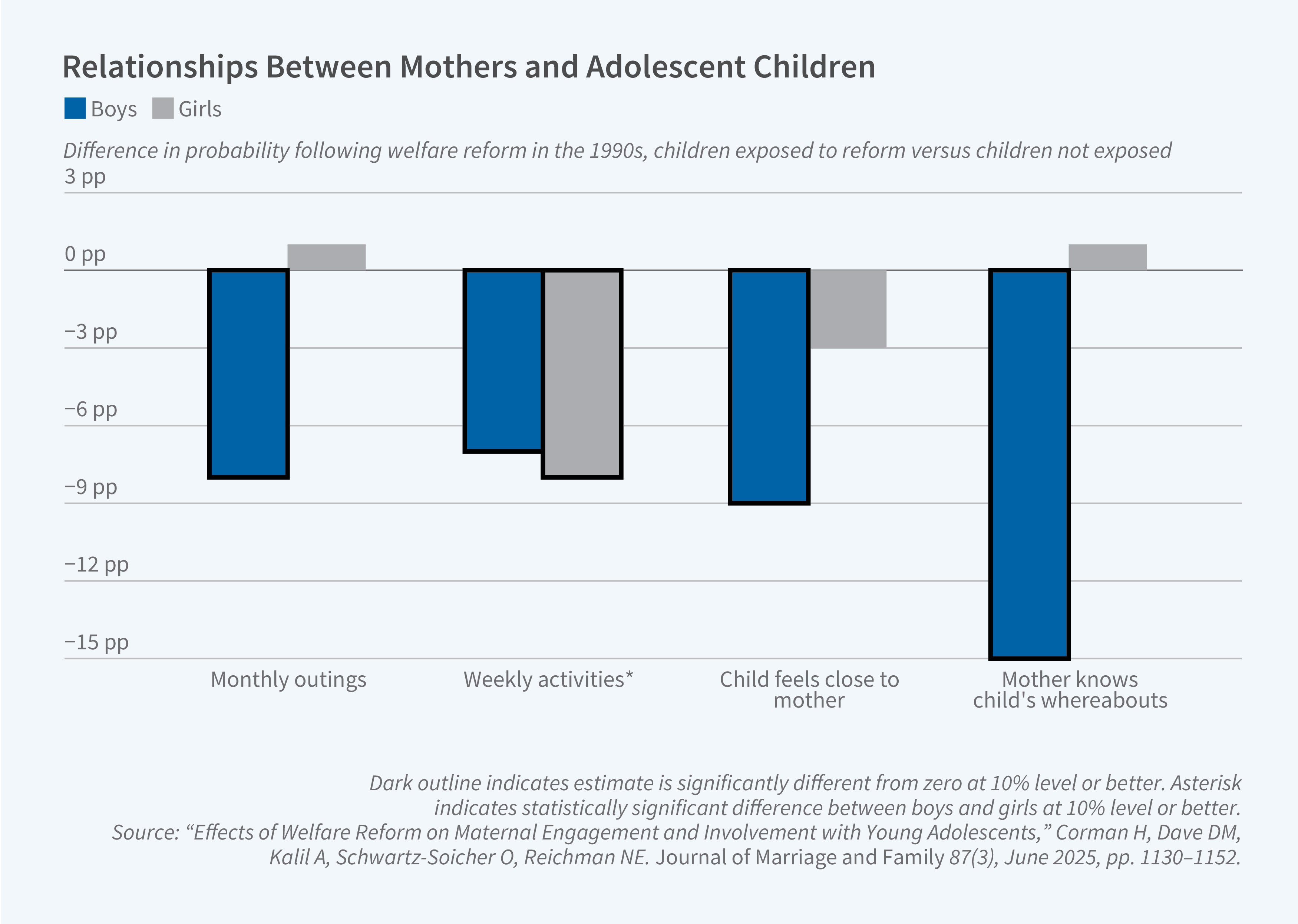
In all our work, we have strived to identify explanatory mechanisms. Two of our studies focused on the effects of welfare reform on parenting quality and family dynamics; these are important outcomes in their own right and potential mediators of welfare reform's effects on adolescent behaviors. The first study, using linked mother-child data from the National Longitudinal Survey of Youth 1979 (NLSY79), focused on the quality of the home environment for preschool-aged children, and the second study, also using data from the NLSY79, focused on maternal engagement and involvement with their young teenagers.10,11 Among young children, welfare reform did not affect the time and material resources mothers devoted to cognitively stimulating activities, but it decreased mothers’ emotional support in parent-child interactions, suggesting a potential mechanism underlying welfare reform's effects on adolescent delinquent and health-risk behaviors—early childhood origins of adolescent functioning. In the second study we looked at teens’ reports of activities they engaged in with their parents, their perceived closeness to their mothers, and whether mothers monitored their behavior. The results, shown in Figure 5, indicate that welfare reform decreased the quality of parent-child interactions across multiple dimensions for boys but had little effect for girls. All told, these results suggest that welfare reform disrupted mothers’ relationships with and emotional support for their children, particularly their sons, which may explain the pattern of stronger negative effects of welfare reform on boys.
More recently, as the cohort of children exposed to welfare reform has come of age and data have become available, we expanded our focus to next-generation adults. We focused on food insecurity, a fundamental form of hardship linked to health. Using data from the Panel Study of Income Dynamics, we found that exposure to welfare reform during childhood substantially reduced the incidence of food insecurity in adulthood (by about 10 percent for a five-year increase in exposure), but only among women.12 We found much smaller and less consistent effects of childhood exposure to welfare reform on food insecurity in adulthood for men.
Overall, the findings from our research program suggest that while welfare reform had positive effects on women’s employment, crime, and substance use and on teenage girls’ high school dropout rates and fertility, there were negative intergenerational effects on adolescent delinquent behaviors and substance use for boys. We also found that welfare reform reduced next-generation adult food insecurity (a positive outcome), but mainly for girls. Thus, it appears that the gains from welfare reform have come at a cost to the next generation of boys, who have been falling behind girls in terms of high school completion. More generally, the findings from this research underscore that large-scale social policies can have substantial unintended effects that cross generations.
Endnotes
Effects of Welfare Reform on Illicit Drug Use of Adult Women, Corman H, Dave DM, Reichman NE, Das D. NBER Working Paper 16072, June 2010, and Economic Inquiry 51(1), April 2013, pp. 653–674.
Effects of Welfare Reform on Women's Crime, Corman H, Dave DM, Reichman NE. NBER Working Paper 18887, June 2014, and International Review of Law and Economics 40, 2014, pp. 1–14.
Effects of Welfare Reform on Women's Voting Participation Dave DM, Corman H, Reichman N. NBER Working Paper 22052, March 2016, and Economic Inquiry 55(3), July 2017, pp. 1430–1451.
Effects of Welfare Reform on Educational Acquisition of Young Adult Women, Dave DM, Reichman NE, Corman H. NBER Working Paper 14466, December 2011, and Journal of Labor Research 33(2), February 2012, pp. 251–282.
Effects of Welfare Reform on Vocational Education and Training, Dave DM, Reichman NE, Corman H, Das D. NBER Working Paper 16659, January 2011, and Economics of Education Review 30(6), December 2011, pp. 1399–1415.
Effects of Maternal Work Incentives on Youth Crime, Corman H, Dave DM, Kalil A, Reichman NE. NBER Working Paper 23054, January 2017, and Labour Economics 49, December 2017, pp. 128–144.
Effects of Maternal Work Incentives on Teen Drug Arrests, Corman H, Dave DM, Kalil A, Reichman NE. Advances in Health Economics and Health Services Research 25, October 2017, pp. 111–142.
Intergenerational Effects of Welfare Reform: Adolescent Delinquent and Risky Behaviors, Dave DM, Corman H, Kalil A, Schwartz-Soicher O, Reichman NE. NBER Working Paper 25527, February 2019, and Economic Inquiry 59(1), January 2021, pp. 199–216.
Effects of Welfare Reform on Positive Health and Social Behaviors of Adolescents, Reichman NE, Corman H, Dave DM, Kalil A, Schwartz-Soicher O. Children 10(2), January 2023, Article 260.
Welfare Reform and the Quality of Young Children's Home Environments, Kalil A, Corman H, Dave DM, Schwartz-Soicher O, Reichman NE. NBER Working Paper 30407, August 2022, and Demography 60(6), December 2023, pp. 1791–1813.
Effects of Welfare Reform on Maternal Engagement and Involvement with Young Adolescents, Corman H, Dave DM, Kalil A, Schwartz-Soicher O, Reichman NE. NBER Working Paper 28077, November 2020, and Journal of Marriage and Family 87(3), January 2025, pp. 1130–1152.
Effects of Welfare Reform on Household Food Insecurity Across Generations, Corman H, Dave DM, Reichman NE, Schwartz-Soicher O. NBER Working Paper 29054, July 2021, and Economics and Human Biology 45, April 2022, Article 101101.


