Q&A with Professor Kathleen McGarry, Co-Principal Investigator of the NBER Coordinating Center on the Economics of Alzheimer’s Disease and Alzheimer’s Disease-Related Dementias (AD/ADRD) Prevention, Treatment, and Care
 Introduction
 Introduction
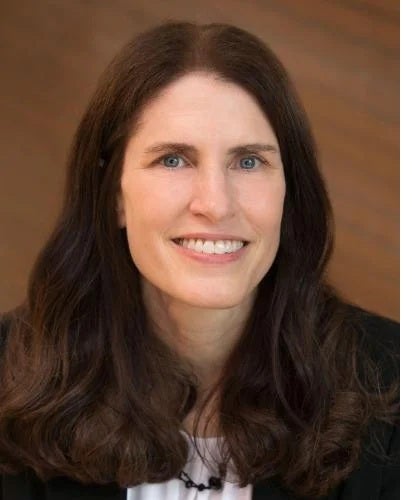
Kathleen McGarry is professor and chair of the Department of Economics at the University of California, Los Angeles where she has been since 1992. She is a co-principal investigator of the NBER Coordinating Center on the Economics of Alzheimer’s Disease and Alzheimer’s Disease-Related Dementias (AD/ADRD) Prevention, Treatment, and Care. She also leads the NBER International Long-Term Care project. McGarry is also a co-investigator of the Health and Retirement Study and served as a senior economist at the White House Council of Economic Advisers over the period 2000–01.
Research Background and Expertise
Question: What initially drew you down the path of studying the economics of long-term care generally?
McGarry: My research has always focused on the economics of aging. I began studying poverty among the elderly as a graduate student, and that quickly led to research on public transfers like the Supplemental Security Income program, Social Security, and then eventually to family transfers. And in the United States, transfers between family members tend to go—what they term—downstream from parents to children with parents making inter vivos transfers to the children while they're alive and bequests after they die. Children also give to elderly parents, but here the mechanism tends to be in terms of time help with children taking care of their elderly parents by providing long-term care or other types of help. So, I just sort of transitioned into working on that topic, looking at how individuals insure against long-term care, the role of families (and particularly the role of daughters) in caring for their elderly parents.
I think one of the striking aspects of our long-term care system is the lack of insurance coverage. Medicare covers healthcare for the elderly but doesn't really cover long-term care. Medicaid does cover long-term care, but only for those who have little in the way of financial resources. Despite this gap in insurance coverage, and probably in part because people don't realize there is a gap, the market for formal long-term care insurance is very small and families end up shouldering the burden of providing care. That places a lot of stress on families, and particularly in the case of a parent with dementia, where patients often need around-the-clock care, that's exhausting, stressful work, and it has negative financial and health consequences for the caregiver. So I started doing a lot of research on that issue.
I think one of the things that's so interesting is it's not just a US problem, but something that countries around the world face, both developed and developing nations, and countries with national long-term care insurance programs, and without, and nobody really has a good answer. So, it's interesting to study a question that we haven't figured out the answer to. I think the second aspect of the subject that interests me is that it's such a personal topic for many. Whenever I give a talk on long-term care anywhere, people come and tell me their stories about their own families, their grandparents, their parents, how it's touched them. And it's nice to feel like I'm studying something that matters.
Question: Could you briefly summarize the most significant or perhaps surprising findings from your research on this topic?
McGarry: This is an international problem. Four years ago, Jon Gruber and I started the NBER International Long-Term Care project, which tries to learn something by looking at how long-term care is provided around the world. We started with a group of 10 countries and released a first volume through the NBER and the University of Chicago Press. One of the really interesting things that we learned in looking at the landscape for long-term care in all these countries is no matter what sort of system is in place, whether there's national long-term care insurance, like in Germany, or extensive coverage through national health insurance programs or means-tested programs, like in the US or England, families end up providing much of the care. So even though we don't have a national long-term care insurance program while other countries do, they still have families shouldering much of the burden.
The second point related to this idea is that, even in countries without national long-term care insurance like the US, the public sector ends up paying for much of the formal care. In the US, many people eventually become eligible for Medicaid and that program ends up covering much of their care. So even though very different institutional infrastructures exist, a lot of the outcomes end up being the same. That, to me, was really surprising. We tend to think in the US, oh, we got it all wrong, everybody else knows what they're doing. And it's not really true.
Question: What role can economic research play in improving the quality of life for those with dementia and their caregivers?
McGarry: I think a big role that we can play is providing a better understanding of the risks and the costs of long-term care. We can help individuals and their families prepare for potential future needs. One of the things we're learning about is that the impact of dementia and cognitive decline generally starts very early, far before any sort of formal medical diagnosis. There have been some recent economic studies that show that individuals who are eventually diagnosed with dementia are significantly more likely to make financial mistakes, like missing payments on a credit card or having their credit score go to subprime, as early as six years before diagnosis.
Another recent paper found significantly larger declines in wealth among those who develop dementia relative to those who don't, again, about six years before diagnosis. So wealth starts declining, whether it's due to financial mistakes or fraud or whatever is happening. Economists also show, in another paper, that individuals fail to recognize early declines in cognition. In the Health and Retirement Study, individuals are asked if their cognition has declined and they say, no, it's the same as or better than it was when you interviewed me a couple of years ago. And yet you can look in their responses to cognitive tests and see that it's declining. So we don't realize that we're having problems and we're making mistakes. I think if people were aware of this, they could make better plans, setting up, sort of, checks and balances in their financial life, perhaps having a child or advisor or someone help with their finances, or just keep an eye on things. I think it’s important to realize that you're not going to be able to be aware of your own decline.
I think the other thing we need to make people aware of is that there's a very real chance that they're going to need formal care someday, whether at home or in an institution. And particularly in the case of dementia, as we talked about earlier, families can't do this and that level of care is expensive. So planning is important. Economists can, I believe, contribute just by highlighting the need to plan for these contingencies and by helping to improve the functioning of long-term care insurance markets. Many economists have studied long-term care insurance, myself included, and people are now looking at substitutes like the role for home equity in financing care, or new financial products like joint life insurance and long-term care insurance products.
And when we think of costs, we need to realize the costs are not just the price of a caregiver or the nursing home, but also the costs borne by family. They may have to take time out of the labor market and reduce hours of work. One of the things I found was slower wage growth among caregivers. You can't take on that extra project at work. You can't stay overtime or maybe travel for a business trip or something similar because you have caregiving responsibilities. So it ends up affecting your career path. There are also studies showing that caregiving impacts the health of the caregiver with increased levels of stress and declines in self-reported health. If we knew this ahead of time, we might be able to plan better and understand what's going to happen. At least be aware of it, maybe save more early on in your career because you know you might have to take time off to care for a parent or something like that. And also help with public policies to try to protect caregivers, to try to help with insurance, and those sorts of things.
Question: What do you see as the greatest challenges as we move forward with a growing aging population?
McGarry: I think that's it—the sheer increase in the number of elderly people that we're going to have to care for and the growing number with long-term care needs. As you know, people are living longer, but there are also declines in fertility, making it increasingly difficult to find caregivers. Part of the aging of the population is that coming generations of elderly are going to have fewer children. Right now, the baby boomers are providing care for their elderly parents. Soon they're going to be the ones needing care and they have fewer children to provide that care or to take on any sort of financial responsibility for paying for that care.
In the formal sector, we're already dealing with shortages of paid caregivers, and that situation is going to be exacerbated over time. We just talked about what a difficult job caregiving is; it is a low-wage job with difficult working conditions. People aren't flocking to it, especially after the COVID pandemic. Lots of people are leaving the industry. So, we need to find ways to attract more people to this type of employment, which is going to require better wages and better working conditions. I think that's where we'll really struggle.
About the NBER Coordinating Center
Question: Can you explain the mission and goals of the NBER Coordinating Center on the Economics of Alzheimer's Disease and Alzheimer's Disease-Related Dementias (AD/ADRD) Prevention, Treatment, and Care?
McGarry: The Center obviously aims to foster economic research and encourage more economists to address these many outstanding questions and develop new avenues of research. There are interesting topics in the space, regardless of the field in economics in which one wants to work. Health economics is obviously relevant, and there are the labor economic issues I've talked about in terms of the employment effects for caregivers and attracting workers to the profession. But also understanding the role of technology. Can we use technology to help with the demand for caregivers? Stepping outside of the most obvious topics, there are important questions in fields like industrial organization: What's the ideal structure of nursing homes and the home healthcare industry? In developing economies, we need to examine care in those countries where children have left rural areas and moved to cities or moved to other countries. How are they going to care for their elderly? And, of course, modeling options for optimal insurance design.
Interestingly, one of the projects supported by the Center looks at the relationship between lead water pipes in the last century and later dementia. So, economic historians are involved. It's hard to find a field in economics that cannot contribute to understanding and addressing some of these issues. Economists really need to start realizing that the type of work they're doing, regardless of field, can answer or help answer some of these important questions. Therefore, one of the Center's goals is to highlight the topic, and the questions, and try to attract more people to work on them.
Question: The Center is prioritizing some topics of research. Could you expand upon some of the most important ones?
McGarry: I think all the principal investigators have their favorite topics. I'll just go back to what I have said. There are so many important issues. I wouldn't want to say one's more important than others, and I'm sure there are topics we haven't thought of. I never would have thought to start a project looking at lead in water in the last century and what that means for dementia today. So, there are going to be things we haven't even thought of that are important to understanding the economics of dementia. I would encourage researchers just to think creatively about the work they're doing, what ties there might be, and to propose ideas. I hate to equivocate so much, but everything is going to be important.
Question: What opportunities exist for junior researchers to get involved in the Center that might bring some of these ideas?
McGarry: It's a great opportunity for junior researchers; they are setting up their career path and realizing that the economics of Alzheimer's, dementia, and long-term care has important questions. Specifically, we have awards we call “EC-READs” for early career research in the economics of ADRD. These are two-year awards that include funding but, importantly, also have a mentoring component. That's unusual for many grants. The recipient not only receives funds they need to carry out their work, but they're paired with a senior researcher in the field who serves as a mentor. In addition, they're invited to training sessions that the NBER runs. We just held one discussing topics like submitting research papers to journals, responding to referee reports, and so forth. And through the EC-READ awards, early career researchers are given opportunities to present at both smaller Center events and larger public conferences.
I want to encourage junior researchers to think about the other opportunities that come with being part of the consortium through an early career grant and think about applying for it because of these valuable mentorship opportunities. You become part of a group of people and you're going to get lots of support and advice.
Question: What would success look like for the Center five years from now?
McGarry: We hope to foster a large and growing group of affiliated scholars who've used their research awards to launch their careers in new directions, and to have been successful in attracting new people to the field. The economics profession is full of extremely intelligent and creative scholars working in a variety of fields and having more people turn some of their attention to understanding the economic aspects of dementia and long-term care can really move this research forward. I also hope that as we get more existing scholars working on this topic, a snowball effect emerges where they will also train their graduate students in the area, and we'll witness a new generation of researchers in ADRD and related topics. It's not something economists have paid a lot of attention to before, but given the growing need, the importance of policy, and the importance just on a personal level, I really hope we can get that message out and attract lots of people who never thought of this as a topic that their work could address.


