How Americans Think about Health Care and Insurance
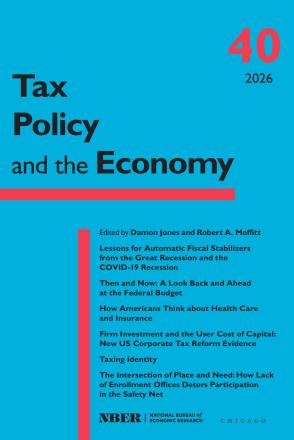
You may be able to download this chapter for free via the Document Object Identifier.
This paper investigates how Americans perceive and reason about health insurance policies through two large-scale surveys and experiments conducted in 2019 and 2025. We elicit open-ended considerations, measure factual knowledge, and examine views on equity, fairness, efficiency, and different policies. Across both surveys, respondents consistently emphasize costs, affordability, and access as their main concerns. There is broad agreement about efficiency-related effects: most believe that expanding coverage increases preventive care use, reduces job-lock, and improves overall health. However, perceptions diverge on broader “spillover” benefits—such as reduced disease spread and better community health—which Democrats tend to view more positively. Views on equity are also largely aligned, with widespread recognition that health outcomes are not fully under individual control and that financial protection reduces stress, though partisans differ somewhat in how strongly they prioritize helping low-income households afford insurance. Partisan gaps are much larger when it comes to policy preferences. Democrats show stronger support for single-payer systems, expanded coverage, and greater government involvement, while Republicans express more satisfaction with the current system and prefer limited government roles. These differences stem less from contrasting efficiency or fairness beliefs and more from fundamentally different views of government and its proper scope. Experimental evidence underscores the power of concrete, program-specific information. Abstract messages about efficiency or equity in 2019 had little effect, whereas in 2025, targeted information about Medicare and Medicaid significantly increased support for more government provided health insurance and expansion of existing programs, including among Republicans. Overall, the results suggest that detailed, positive program-based information can meaningfully shift public attitudes toward greater acceptance of government-provided health insurance, perhaps because such information can address the differences in views about government itself.
-
Copy CitationBeatrice Ferrario and Stefanie Stantcheva, Tax Policy and the Economy, Volume 40 (University of Chicago Press, 2025), chap. 3, https://www.nber.org/books-and-chapters/tax-policy-and-economy-volume-40/how-americans-think-about-health-care-and-insurance.Download Citation
Related
Supplementary Information
More from the NBER
In addition to working papers, the NBER disseminates affiliates’ latest findings through a range of free periodicals—the NBER Reporter, the NBER Digest, the Bulletin on Health, the Bulletin on the Economics of Alzheimer's, and the Bulletin on Entrepreneurship—as well as research spotlights, lectures, and panel videos.


