Public Finance in the Age of AI: A Primer
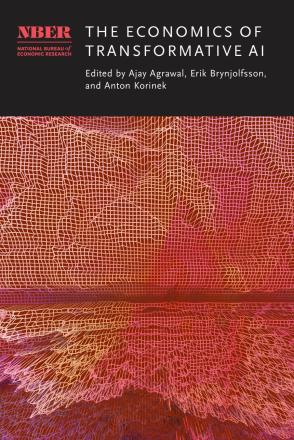
Transformative artificial intelligence (TAI)—machines capable of performing virtually all economically valuable work—may gradually erode the two main tax bases that underpin modern tax systems: labor income and human consumption. We examine optimal taxation across two stages of AI-driven transformation. First, if AI displaces human labor, we find that consumption taxation may serve as a primary revenue instrument, with differential commodity taxation gaining renewed relevance as labor distortions lose their constraining role. In the second stage, as autonomous artificial general intelligence (AGI) systems both produce most economic value and absorb a growing share of resources, taxing human consumption may become an inadequate means of raising revenue. We show that the taxation of autonomous AGI systems can be framed as an optimal harvesting problem and find that the resulting tax rate on AGI depends on the rate at which humans discount the future. Our analysis provides a theoretically grounded approach to balancing efficiency and equity in the Age of AI. We also apply our insights to evaluate specific proposals such as taxes on robots, compute, and tokens, as well as sovereign wealth funds and windfall clauses.
-
Copy CitationAnton Korinek and Lee M. Lockwood, The Economics of Transformative AI (University of Chicago Press, 2026), chap. 15, https://www.nber.org/books-and-chapters/economics-transformative-ai/public-finance-age-ai-primer.Download Citation
-
Related
Supplementary Information
Published From Paper
More from the NBER
In addition to working papers, the NBER disseminates affiliates’ latest findings through a range of free periodicals—the NBER Reporter, the NBER Digest, the Bulletin on Health, the Bulletin on the Economics of Alzheimer's, and the Bulletin on Entrepreneurship—as well as research spotlights, lectures, and panel videos.


