Tax Incentives for Research and Development: Policy Design and Evidence
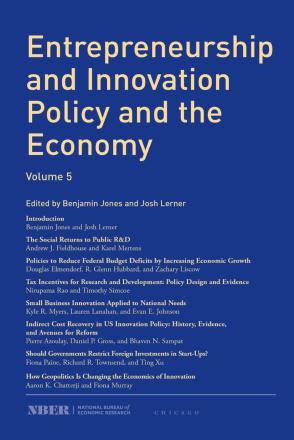
This chapter reviews the economic theory and empirical evidence on R&D tax incentives, with a focus on US policy. While the economic evidence strongly supports the conclusion that tax credits stimulate R&D, estimates of the sensitivity vary widely across countries, over time and firm types. In particular, there is increasing evidence that small firms are more responsive to R&D tax incentives, even though large multinationals account for majority of tax expenditure. The US system allows firms to deduct qualifying R&D from taxable profits and also provides an incremental tax credit for spending above a firm-specific base. However, complex base rules lead to effective credit rates that are far below the statutory rate for most firms, and can produce dynamic disincentives for R&D. We suggest several ideas for simplification of the US credit.
-
-
Copy CitationNirupama Rao and Timothy Simcoe, Entrepreneurship and Innovation Policy and the Economy, volume 5 (University of Chicago Press, 2025), chap. 3, https://www.nber.org/books-and-chapters/entrepreneurship-and-innovation-policy-and-economy-volume-5/tax-incentives-research-and-development-policy-design-and-evidence.Download Citation
More from the NBER
In addition to working papers, the NBER disseminates affiliates’ latest findings through a range of free periodicals — the NBER Reporter, the NBER Digest, the Bulletin on Health, and the Bulletin on Entrepreneurship — as well as online conference reports, video lectures, and interviews.


