A Subscription Model for Hepatitis C Treatment
Direct-acting antivirals (DAAs), introduced in December 2013, can cure hepatitis C, the most common bloodborne infection in the US, with a single 8- to 12-week course of treatment. Treatment can prevent costly downstream conditions, such as cirrhosis and liver cancer, and reduce transmission of this infectious disease. When first launched, however, treatment with DAAs cost between $84,000 and $94,000 per patient.
Treating Louisiana's roughly 40,000 Medicaid enrollees with hepatitis C at those prices would have cost about $3 billion, or 40 percent of the state's Medicaid budget. Confronted with similar expenses, many other states rationed access because treatment costs must be paid in the current year while savings arrive later, and because states bound by balanced-budget rules cannot borrow against those future savings.
In Spending to Save: The Subscription Model for Eradicating Hepatitis C in Louisiana (NBER Working Paper 35583), Kevin Callison, Rena M. Conti, Jonathan Gruber, and Jacob Wallace study Louisiana's 2019 "subscription model" for hepatitis C treatment. The state paid Gilead subsidiary Asegua Therapeutics a fixed fee of about $175 million over five years, in return for which it received unrestricted access to DAAs for its Medicaid population. This arrangement allowed the state to spread the cost of expanded treatment over the years in which savings accrued while keeping drug spending fixed regardless of how many patients were treated.
Adopting a subscription model for hepatitis C treatment for Medicaid patients is estimated to have saved Louisiana $266 million by treating more existing and newly diagnosed patients.
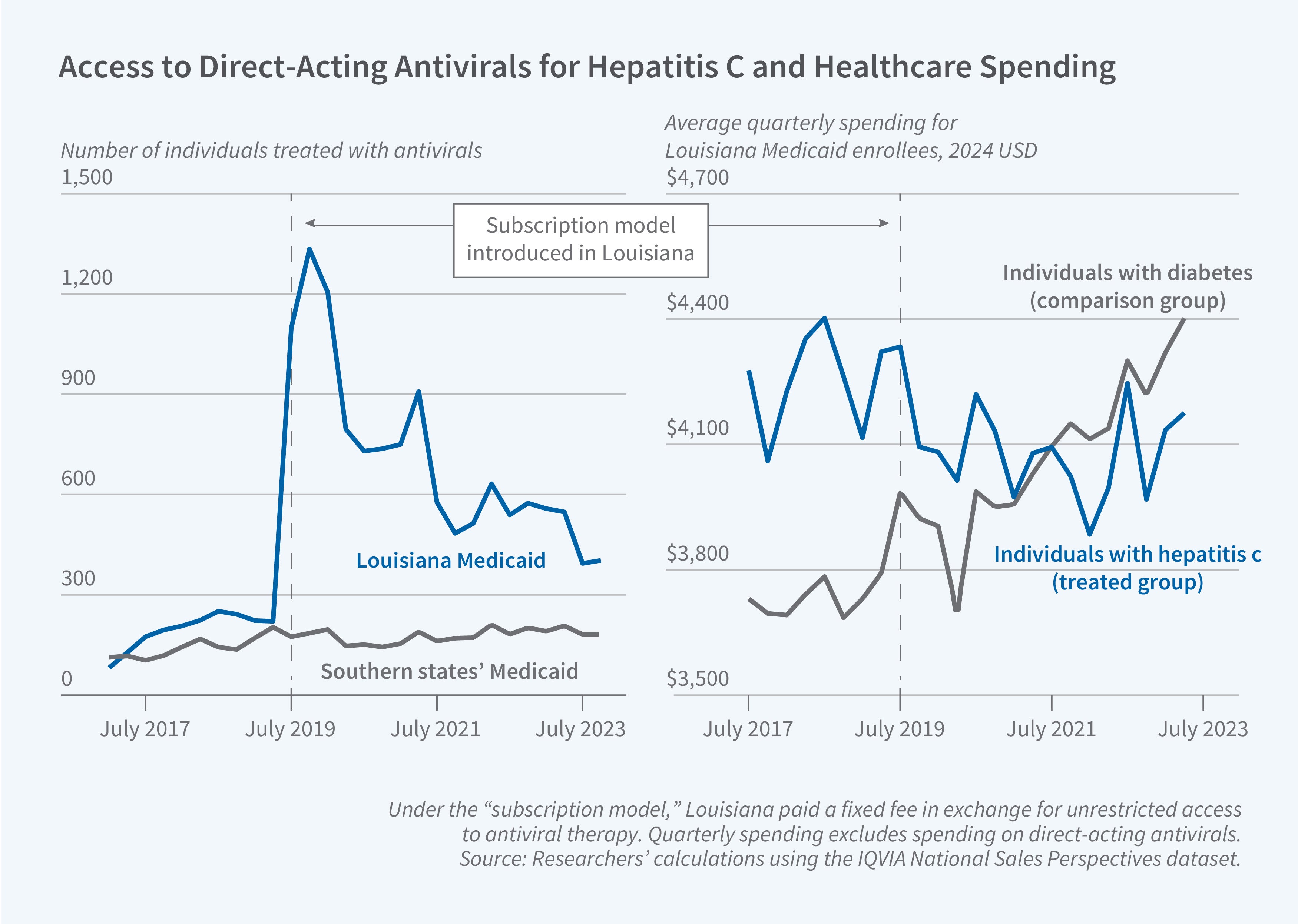
Using Louisiana Medicaid claims data from 2017 to 2023 and national DAA sales data from IQVIA, the researchers estimate the subscription model's effects. They compare how spending changed over time for Medicaid enrollees who were diagnosed with hepatitis C and for those with diabetes or HIV, two chronic conditions that were unaffected by the contract.
DAA use rose sharply after the subscription model launched in July 2019, with the number of Medicaid enrollees treated jumping from under 300 in 2019:Q2 to nearly 1,200 in the next quarter. Over 11,000 enrollees were treated in the following four years. No comparable increase occurred among Medicaid enrollees in other Southern states or among Louisianans with non-Medicaid coverage. The share of enrollees treated within six months of diagnosis rose from less than 20 percent before the launch to more than 80 percent afterward.
Spending for enrollees with hepatitis C followed trends similar to those for the diabetes and HIV comparison groups before July 2019 but diverged afterward. Averaging across the two comparisons, the subscription model reduced non-DAA Medicaid spending by about $1,045 per year, or 6.1 percent, for enrollees with hepatitis C. The savings grew to nearly $1,800 by the fourth year. These figures average over all enrollees with hepatitis C, whether they were treated or not. Scaling the estimates by the 21.6 percentage point increase in the likelihood of treatment among Medicaid patients previously diagnosed with hepatitis C, the implied savings are about $4,800 per treated enrollee per year.
New hepatitis C, diabetes, and HIV diagnoses followed similar downward trends before the introduction of the subscription model, reflecting a natural decline after Louisiana's 2016 Medicaid expansion. Subsequently, new diabetes and HIV diagnoses leveled off and then rose again as Medicaid enrollment grew during the COVID-19 pandemic, while new hepatitis C diagnoses fell to roughly half their pre-policy level by July 2023. The researchers estimate a decline of about 330 new hepatitis C diagnoses per quarter relative to new diabetes and HIV diagnoses, or 23 percent, implying 7,585 cases averted over the five-year contract.
The researchers estimate that Louisiana’s Medicaid program realized gross savings of $266 million over the 2016–21 period: $116 million from treating patients who had been diagnosed before the adoption of the subscription model, $60 million from treating newly diagnosed patients, and $90 million from averted infections. Annual savings grew from $20 million in the first year to $80 million in the fifth year as savings from treated cohorts and averted cases accumulated.
The researchers also estimate that if Louisiana had continued treating patients at its pre-policy rate while paying the falling prices seen in other Southern Medicaid programs, it would have spent $127 million to treat 4,345 enrollees. The subscription model cost $37 million more but treated 11,992 people, and over the five-year budget period it improved Louisiana's fiscal position by about $229 million. This implies a return of over six dollars for each dollar spent.
- Leonardo Vasquez