Q&A with Professor Rhoda Au, Co-Principal Investigator of the NBER Coordinating Center on the Economics of Alzheimer’s Disease and Alzheimer’s Disease-Related Dementias (AD/ADRD) Prevention, Treatment, and Care
 Introduction
 Introduction
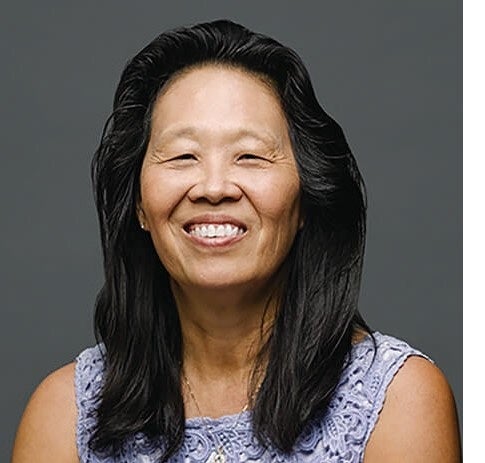
Rhoda Au is Professor of Anatomy & Neurobiology, Neurology, Medicine and Epidemiology at Boston University Chobanian & Avedisian School of Medicine and School of Public Health, and a long-time investigator at the Framingham Heart Study. Leveraging technological advances in software, hardware, and deep machine learning/artificial intelligence analytic strategies, her current research objectives are to develop and validate globally feasible screening and monitoring tools for Alzheimer’s disease and related dementias and to redefine and generate multi-sensor digital biomarkers. Her strategic vision is to shift the focus on brain-related disorders to a broader emphasis on brain health.
Research Background and Expertise
Question: What initially drew you down the path of studying aging and dementia?
Au: I don’t have a typical story related to this question. It is much more of a pragmatic “fell into it” and then “moved to an area that wouldn’t put me in competition with much more senior researchers at the time.” Thus, my path was more serendipitous than deterministic.
Question: How does your research draw upon a clinical understanding of dementia and how can that inform insights into health economics?
Au: My research has always been centered on what I think we are not doing effectively. The blunt instrument tools used to measure highly heterogeneous behaviors, not detecting symptoms early enough in the course of the disease, not having research methods that are applicable globally, including in low-to-middle income countries. This means that, from an economic standpoint (or any standpoint), what is being measured is based on highly biased data. Currently, I think a lot about “how do we achieve the goals of precision AD medicine” and the prevention side of this to precision brain health. And if we achieve the objectives of precision, how much that will lead to significant economic impact, domestically and internationally.
Question: Could you briefly summarize the most significant, or perhaps surprising, findings from your research on aging and dementia.
Au: Since I think a lot on the edges of research, where there is not always scientific precedent, my hypotheses are just that—hypotheses. Thus, I’m always surprised when what I thought should be the case turns out to be the case. Research is supposed to be exploring what is unknown. If there is certainty in what you will find, then I don’t think it is really research. I find it interesting that there is research defined as “high risk, high reward,” which implies “low risk, low reward” research is the mainstream. It feels like the reverse should be true. I seem motivated to do research where most of the time I am surprised and then, because I’m surprised, each finding should be trying to push some part of the research forward in a significant way. It seems that what is most significant in my work is connecting dots where, initially, most don’t see the connection, and then I stick with it until the connections finally become more evident. When I first used the words “digital” and “biomarker” together, I was reprimanded for doing so. Today, these two words together are commonly bandied about in a way that I don’t think reflects the true potential of what they could be.
My most significant work today is increasing access to the Framingham Heart Study brain aging data. I don’t think any of my own research is distinctly impactful. It takes me too long to get my ideas funded, so even though I can see ahead, I can’t make any of it happen until its initial potential significance is diluted. So instead, I focus on the research I can enable. If I can help lots of researchers, then science will go forward in ways that I cannot do or imagine.
Question: What role can economic research play in improving the quality of life for both patients and caregivers?
Au: Since I’m not an economist, I’m not sure I can answer this question appropriately. What I think about is how reactive the current medical model is and where even prevention is viewed within this context. I think there is an opportunity to evaluate how much technological advances that are available at the consumer level will lend themselves to prevention measures outside of the traditional medical model, that could lead to reduction in disease prevalence, delay disease onset, assist with symptom management, and decrease disease incidence. These are just some of the outcomes that will improve the quality of life for both patients and caregivers.
Question: What do you see as the greatest challenges, be they social, economic, or medical, for the United States as we move forward to a population with a significantly higher share of dementia?
Au: The necessary shift in research and clinical mindset is the biggest barrier to meeting this significant challenge. We currently are locked into doing science based on the methods we know, but the complexity of what we are confronting requires developing new methods to match the science we need to do.
About the NBER Coordinating Center
Question: Can you explain the mission and goals of the NBER Coordinating Center on the Economics of Alzheimer's Disease and Alzheimer's Disease-Related Dementias?
Au: Since I came into NBER completely unaware of how to do economics research in AD/ADRD, my objectives have centered around how to bring different worlds of talent (e.g., clinical, technical, and economic) to work together in ways that are different than each has done in isolation.
Question: I understand the Center is prioritizing some topics of research. Could you expand upon some of the most important?
Au: I know that there is a natural experiment currently underway with the update of GLP-1, that many are using today to reduce BMI, where there seems to be some pretty interesting opportunities to think about what is going to be the overall economic impact since there are many comorbidity risk factors that are impacted by reduction in BMI, which in turn are comorbidity risk factors for all chronic diseases, including AD/ADRD. There are, however, known and unknown side effects of these drugs where the balance between benefit and harm needs to be better quantified. In addition, in this world of information—that includes a continuum of veracity—every person is now a citizen scientist and much more of a determinant of their healthcare decision-making that may or may not align with that of their healthcare provider. These are areas that are not priorities of the Center today but are ideas I wonder about and whether they should be priorities to consider.
Question: Is the Center taking any specific steps to facilitate collaboration between economists, healthcare researchers, and policymakers?
Au: Yes, all the open meetings and symposiums have the objective of doing just that. The series of mini symposiums are intended to facilitate collaboration between those that don’t normally intersect with each other and are a bit more challenging to think about in terms of design and sustainable impact.
Question: What opportunities exist for junior researchers to get involved with the Center's work? And if you were advising a junior researcher in the field, what would you flag as particularly important topics to work on?
Au: The Center’s EC-READ awards are the most concrete way to get junior researchers involved, as well as the open meetings/symposiums. For those whose goals are to remain in academia, given the realities of needing to meet criteria for tenure, the Center will be helpful in highlighting areas of research that will boost their tenure efforts. For those whose goals are to move outside of academia, I often think about how one distinguishes oneself, and currently we have a growing gap between the health span and the lifespan, and that might be something to think about in terms of what factors are leading to this growing gap and what are the myriad of approaches that can start to decrease it.
Question: What would success look like for the Coordinating Center five years from now?
Au: For me, evidence of new collaborations that span disciplines, geographic representation, and areas of focus.