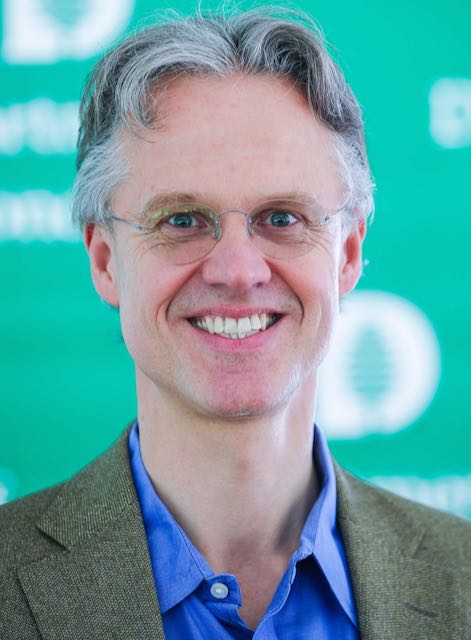
I am an Associate Professor at the
Harvard Kennedy School.
I'm also a Faculty Research Fellow at the
NBER and a Research Fellow at
IZA. I hold a Master's degree in econometrics from Erasmus University Rotterdam
and a PhD in economics from Harvard University. I am married to Ellen Meara, an economist on the faculty in the
Department of Health Care Policy at Harvard Medical School. Her
research focuses on non-medical determinants of health, disparities in
health outcomes by education and race, and the impact of public program
design on economic and health outcomes. See her CV
if you are interested in learning more about her work.
Within my primary field of public economics, I focus my research on income redistribution and social insurance. My research papers seek to understand what drives the demand for redistribution and social insurance, and how the implementation of redistribution and social insurance programs can be improved. This work can be grouped into three related areas.
1. The demand for income redistribution and social insurance (my papers in this area). Understanding how much and why individuals value income redistribution and social insurance programs informs ongoing policy debates regarding the generosity and design of these programs. The fact that income redistribution and social insurance are not transacted in a marketplace has, however, presented a profound challenge to economists because the lack of a marketplace for redistribution and social insurance programs precludes the use of standard revealed preference techniques to study the demand for these programs. To overcome this challenge, I infer preferences for resource transfers to the unfortunate by relying on a variety of alternative methods. These methods include examining self-reported preferences, voting behavior, benefit take-up decisions, and charitable giving in randomized experiments.
From my papers that focus on redistribution, a common theme emerges; preferences for redistribution are not determined solely by financial self-interest but also by social effects. Social effects, sometimes called interdependent preferences, occur when individuals behave differently or have different outcomes because they are influenced directly by the behavior of others around them. These papers contribute not only to our understanding of the demand for redistribution but also to a broader empirical literature on the role of social effects.
2. The supply of social insurance and income redistribution programs (my papers in this area). Just as the demand for social insurance and income redistribution reflects the benefits of these programs, one can view the marginal costs of these programs as determining their supply. Some of my research in this area is empirical and estimates the misallocation cost associated with income redistribution programs that use price controls. These misallocation costs had not been estimated before and these estimates allow for more informed policy decisions on the use of price controls as a means to redistribute income. My other papers in this area are theoretical in nature and show how certain design features can yield the same amount of redistribution with fewer economically costly distortions.
3. Cognitive limitations and the design of income redistribution and social insurance programs. I have only started doing research on cognitive limitations, also sometimes referred to as behavioral decision making, in the past three years and currently have four papers in this area. Income redistribution and social insurance programs often involve sophisticated incentive schedules that aim to minimize the economic distortions they impose. However, if incentive schedules are so complex that individuals have trouble understanding them, individuals will make suboptimal choices. Hence, it is important to take the cognitive limitations of individuals into account when designing public policy. Some of my research in this area examines individuals' response to and understanding of the complex implicit incentives in the Social Security system. Other research in this area examines cognition costs in other settings such as lending in peer-to-peer markets and decision making in elections.
"Network Effects and Welfare Cultures"
(joint with Marianne Bertrand and Sendhil Mullainathan),
Quarterly Journal of Economics, 115(3), pp. 1019-1055, August 2000.
"Permits to Elicit Information"
(joint with Carolyn Kousky and Richard J. Zeckhauser), National Tax Association Proceedings, 99th Annual Conference, pp. 163-170, 2007.
"Moral Hazard in Dutch Disability Receipt: Evidence from an Age Discontinuity in Disability Eligibility Reviews" (with Lex Borghans and Anne Gielen).
"Insurance Benefits from Progressive Taxes and Transfers" (with Hilary Hoynes)
In case you are wondering:
"Doesn't Erzo Luttmer have a PhD from the University of Chicago?
And aren't his fields asset pricing, macroeconomics and
time-series econometrics?" ,
you are probably thinking of my cousin
Erzo G.J. Luttmer.